

Can Reactive Dogs Do Mantrailing? Absolutely! Here’s Why.
Does your dog bark at other dogs? Lunge at passing cars? Find strangers a bit overwhelming? Perhaps you’ve looked at dog training classes or activities before and thought, “There’s absolutely no way my dog could cope with that!”
Well, I’m here to tell you that your dog might just surprise you.
At The Underdog Project, we welcome dogs of all shapes, sizes, breeds and personalities, including plenty who find certain aspects of everyday life a little challenging.
In fact, a large proportion of the dogs who come Mantrailing with us have something that makes traditional group activities difficult for them.
And that’s absolutely fine.
Because Mantrailing isn’t your typical dog training class.
First Things First, What Is a Reactive Dog?
When people hear the term reactive dog, they often picture a dog barking, lunging and generally causing chaos at the end of their lead.
But reactivity isn’t always about aggression.
Dogs can react to things for all sorts of reasons, including:
- Fear: They might find other dogs, people or unfamiliar situations frightening.
- Frustration: They desperately want to get to something, but the lead or another barrier prevents them.
- Excitement: Sometimes the world is just a little bit TOO exciting!
- A combination: Dogs are individuals, and their reactions aren’t always driven by one emotion.
Reactivity can look different from dog to dog, and understanding what’s behind the behaviour is important.
Some dogs struggle around other dogs, while others might react to people, traffic, children or particular environments.
Whatever the trigger, it doesn’t automatically mean your dog has to miss out on enjoyable activities.
Why Mantrailing Can Be Brilliant for Reactive Dogs
Mantrailing is a scent-based activity where dogs use their incredible sense of smell to follow an individual person’s scent trail and find them.
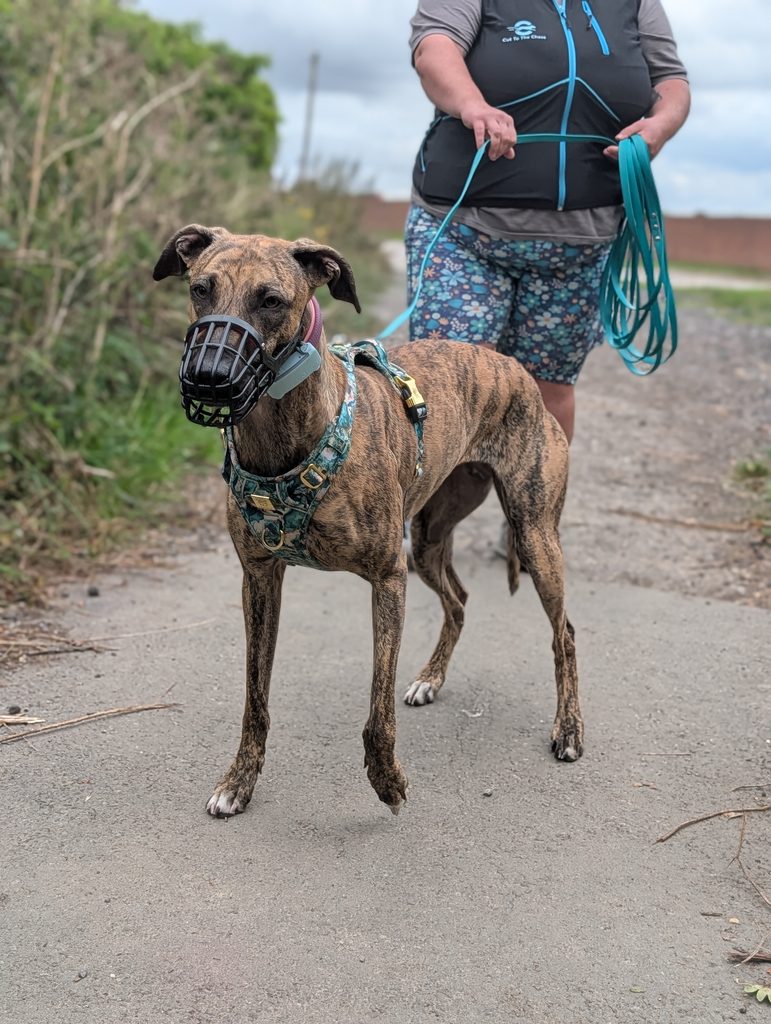
Sounds simple enough, doesn’t it?
But there’s an awful lot going on inside that furry little head!
Your dog is following scent information, making decisions, solving problems and working with you towards a shared goal.
And one of the things I love most about Mantrailing is that it’s all about the individual dog.
We can adapt the activity to suit their abilities, confidence, motivations and needs.
1. Your Dog Has a Job to Do
One of the most interesting things I’ve noticed with reactive dogs is how having a job can change their engagement with the environment.
When dogs have something meaningful to focus on, they may become less concerned about some of the things happening around them.
That doesn’t mean their triggers suddenly disappear or that they stop feeling worried or frustrated.
But I’ve watched dogs who would previously have struggled to recover from a reaction have a quick bark, then make the decision to get straight back to following their trail.
And those moments are wonderful to see.
We don’t start by putting dogs into difficult situations and hoping their enthusiasm for Mantrailing will carry them through.
Instead, we build up their understanding, confidence and motivation in suitable environments first. As they progress, we can carefully introduce additional distractions at distances they can comfortably manage.
The aim is always to help the dog succeed, not to see how much they can tolerate.
2. Sniffing Is a Natural, Rewarding Activity
Dogs experience so much of the world through their noses.
Sniffing is an important part of normal canine behaviour, providing opportunities to gather information, explore their surroundings and engage their brains.
Mantrailing gives dogs an opportunity to put those natural abilities to work.
They get to investigate scent, make choices, solve problems and ultimately find their missing person, who has a reward waiting for them!
For dogs who find certain situations challenging, having an enjoyable activity where they can experience success can be particularly valuable.
3. It’s a Team Activity
Although your dog is the one following the scent, you’re very much part of the team.
You’ll learn to recognise changes in their behaviour, understand how they communicate through their body language and give them opportunities to make decisions independently.
Over time, this can help develop your understanding of your dog and strengthen the way you work together.
And there’s something pretty special about watching a dog show their owner exactly what they’re capable of.
But My Dog Can’t Cope Around Other Dogs!
This is probably one of the biggest misconceptions about Mantrailing.
People hear the words group session and imagine several dogs working together, all standing around in a field.
That’s not how our Mantrailing sessions work.
At The Underdog Project, dogs work individually.
They don’t need to meet, greet or interact with the other dogs attending.
Between their turns, dogs rest in their own vehicles, giving them time to relax and recharge before their next adventure.
We can also make adjustments for dogs who find waiting in their vehicles difficult, such as using reflective covers to reduce visual triggers or arranging parking slightly away from other dogs.
Every Session Is Planned Around the Dogs Attending
When you book a session, I ask about any particular needs, difficulties or triggers your dog might have.
And there’s a very good reason for that!
I use this information to help choose appropriate locations and plan trails that suit the dogs and handlers attending.
For example:
- If your dog is highly reactive to traffic, we can choose somewhere away from busy roads.
- If other dogs are a concern, we can look for quieter locations where we’re less likely to encounter them.
- If your dog finds unfamiliar people difficult, we can plan how people move and interact around them.
We also have a wonderful community of people who help look out for each other during sessions.
Other attendees can act as flankers, helping manage the space around a working dog and politely asking members of the public to give them room where necessary.
Of course, we can’t control everything that happens in a public environment. But careful planning, communication and flexibility can make a huge difference.
You Can Tell Us What Your Dog Needs
At the beginning of sessions, everyone introduces themselves and their dogs.
It’s an opportunity to let the group know about anything that might help your dog feel more comfortable.
We’ve had requests such as:
- Please don’t touch my dog.
- Please avoid direct eye contact.
- Please don’t make sudden movements around them.
- Please give us some extra space.
And that’s absolutely fine!
Nobody is expected to force their dog into uncomfortable interactions.
Real Dogs, Real Progress: Meet Benji and Noodle
I could talk about the benefits of Mantrailing all day, but sometimes the dogs themselves are the best examples.
Benji: Learning to Get Back to the Job
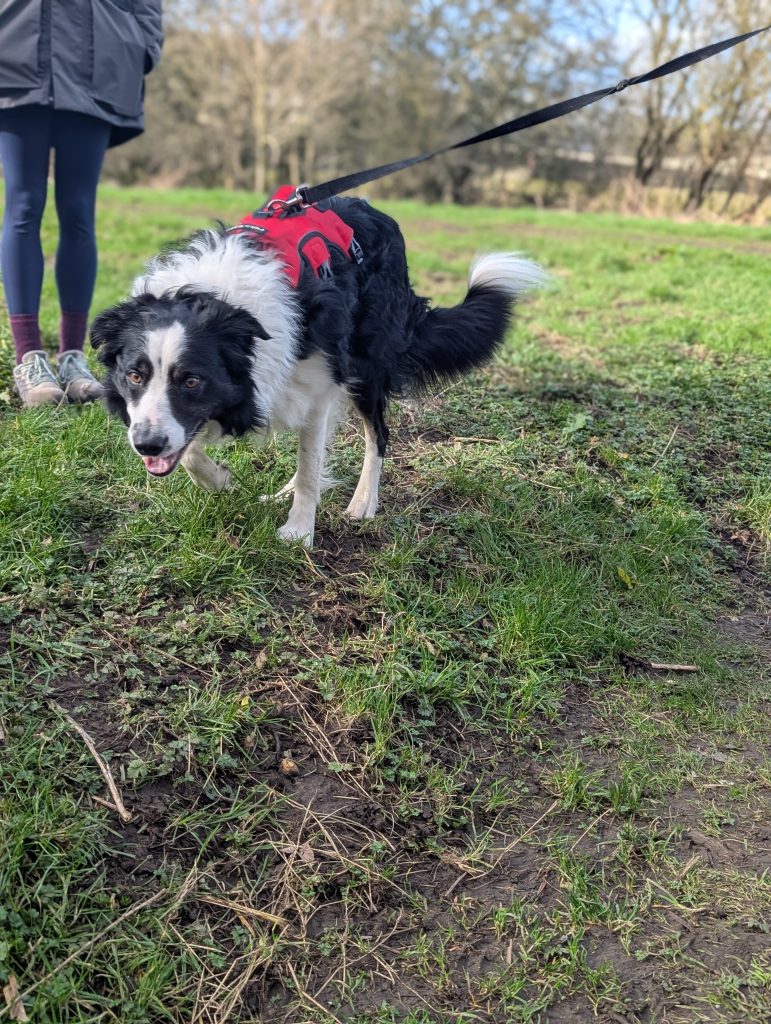
Benji is a Border Collie who has struggled with reactivity towards people, other dogs and traffic.
Previously, if something triggered a reaction, he could find it difficult to settle afterwards.
Through Mantrailing, we’ve seen some really encouraging changes.
Benji is still reactive in certain situations, but his recovery times during trailing have become much shorter.
Sometimes he’ll have a bark at something, then get straight back to work.
We’ve even had occasions where a car has passed slowly at a distance and he’s been able to watch it before continuing with his trail.
That might sound like a small thing to somebody else.
But when you know how challenging those situations have previously been for a dog, they’re moments worth celebrating.
Noodle: A Little Dog Finding Her Confidence
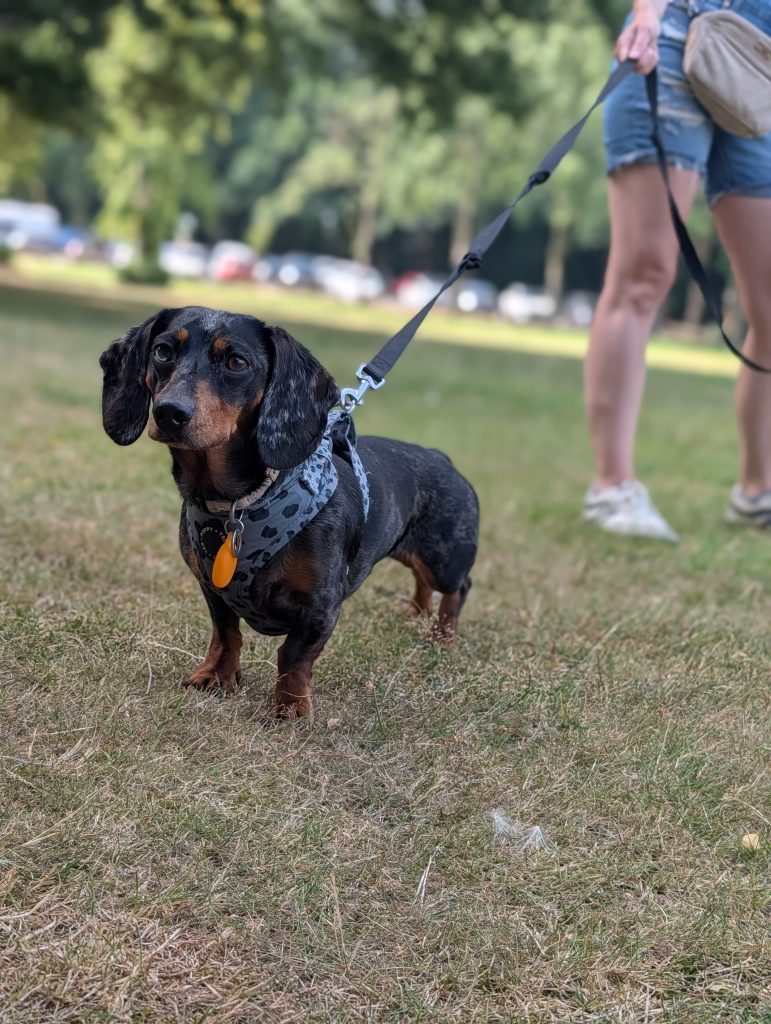
Noodle is a Miniature Dachshund who was quite nervous when she first started Mantrailing.
She also struggled around other dogs.
It took some time to build up her understanding of the game and help her discover just how rewarding Mantrailing could be.
But once things started to click, it was lovely watching her confidence grow.
These days, Noodle can often work past another dog without reacting at all.
Occasionally, she might still have a bark, particularly if another dog barks at her first, but the difference in how she manages those situations during trailing has been fantastic to see.
Neither Benji nor Noodle is a story about Mantrailing magically curing reactivity.
They’re examples of dogs developing skills, confidence and positive experiences through an activity they enjoy.
And every dog’s journey will look different.
I Understand Because I’ve Been There Too
One of the reasons I’m so passionate about making Mantrailing accessible to reactive dogs is because of my own German Shepherd, Peanut.
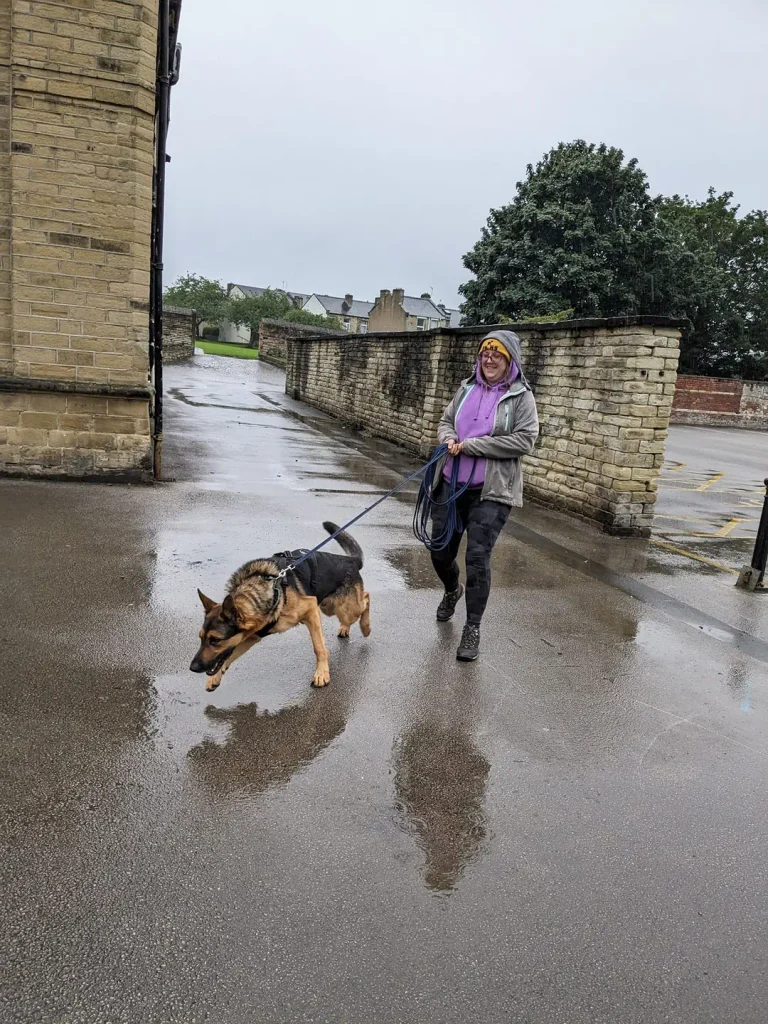
When Peanut was younger, he was attacked by another dog and hit by a car, all within the space of one week.
Understandably, those experiences had a huge impact on him.
Practically overnight, he became reactive towards both people and other dogs.
Suddenly, everyday situations became much more challenging. I found myself having to think carefully about where we went, who we might encounter and how Peanut would cope.
But I didn’t want his world to become smaller and smaller.
I wanted to find something that would give him an opportunity to use his brain, enjoy himself and have positive experiences in environments where people and other dogs might be present, but at a distance he could comfortably manage.
And that’s what led us to Mantrailing.
It gave Peanut a job to do. Something he could focus on, something he was good at, and something we could enjoy together.
Over time, I’ve seen an enormous difference in him.
These days, Peanut is nowhere near as reactive as he once was. He generally copes well with other dogs at a suitable distance, although he understandably still struggles if an unfamiliar dog comes charging up to him.
He’s also much more comfortable around people, provided they respect his space. Direct eye contact or somebody trying to touch him can still make him uncomfortable, so I manage those situations and make sure people understand his boundaries.
And that’s something I think is really important to understand: progress doesn’t have to mean your dog becomes comfortable with absolutely everything.
Peanut still has his boundaries, and that’s okay.
I genuinely believe Mantrailing has played a massive part in his journey. It’s given him opportunities to succeed, helped us build confidence together and allowed him to enjoy activities in environments that would once have been incredibly difficult for him.
Of course, I can’t say Mantrailing alone is responsible for every change we’ve seen. But having watched his progress first-hand, I know just how valuable it’s been for us.
And that’s a huge part of why The Underdog Project exists.
Because I know what it’s like to have a dog who struggles with the world sometimes.
I also know how incredible it feels when that same dog gets the opportunity to show you exactly what they’re capable of.
And What About the Humans?
Here’s something people don’t always think about.
Living with a reactive dog can sometimes feel quite lonely.
You might spend your walks avoiding other dogs, choosing quieter places and trying to prevent uncomfortable encounters.
Traditional group classes might not feel accessible, and it can be difficult to find people who understand your experiences.
But at Mantrailing, the group is largely for the humans!
While the dogs work individually and enjoy their well-earned rest between trails, their owners get to chat, share experiences, celebrate each other’s successes and enjoy being part of a community.
You’ll meet people who understand why a dog walking past another dog without reacting can be a huge achievement.
People who understand that progress isn’t always straightforward.
And people who are genuinely delighted to see your dog succeed.
There’s no expectation that your dog has to be perfect.
They’re dogs, after all!
So, can reactive dogs do Mantrailing? For many dogs, absolutely! But that doesn’t mean every dog will be comfortable in every situation.
Mantrailing can be a fantastic activity for many reactive dogs, but that doesn’t mean every dog will be comfortable in every situation.
Some dogs need quieter environments, more distance from triggers or a slower introduction to the activity.
Others may need additional support with their behaviour before certain environments are appropriate.
Mantrailing isn’t a replacement for qualified behavioural support when that’s needed.
My priority is always to make the experience as enjoyable and appropriate as possible for the individual dog.
That’s why I ask questions, choose locations carefully and adapt sessions to suit the dogs attending.
Ready to Let Your Dog Prove You Wrong?
If you’ve ever looked at your dog and thought, “There’s no way they’d be able to do something like that,” I’d love to show you what’s possible.
The Underdog Project offers Mantrailing sessions around Huddersfield, Wakefield and surrounding areas of West Yorkshire, welcoming dogs with a wide range of personalities, abilities and needs.
You don’t need a perfectly behaved dog.
You don’t need previous experience.
And your dog certainly doesn’t need to be best friends with every dog they meet!
If you’re unsure whether Mantrailing would suit your dog, you’re always welcome to get in touch for a chat.
Alternatively, you can book an introduction directly. Just make sure you tell me about your dog’s needs and triggers on the booking form.
The more I know about your dog, the better I can plan an enjoyable introduction for you both.
Your dog might just surprise you.
Confidence. Connection. Adventure.